Assessing Risk: Dangerous Tree Assessment and Removal
A healthy, well placed tree lifts a property and cools a yard. A compromised tree does the opposite, turning wind, snow, and drought into real hazards. The work of assessing and managing dangerous trees is a mix of science, field sense, and judgment. After two decades in the canopy, I can tell you that the difference between a routine pruning visit and a night callout with flashing lights often comes down to how early someone recognized the warning signs.
What actually makes a tree dangerous
A tree is dangerous when the likelihood of failure is high and the consequences of that failure are serious. Both parts matter. A decaying cottonwood in a remote back corner might be a low priority. The same tree leaning over a bedroom, a daycare pick up lane, or primary power lines earns attention now.
The three pillars of risk assessment are the tree’s condition, the target beneath or beside it, and the site forces acting on it. Condition covers structure and health, from root plate to crown. Targets include people, buildings, parked vehicles, patios, and utilities. Site forces mean wind exposure, soil moisture, slope, snow load, and in some regions the fire regime. Good assessment integrates all three, not just a single dramatic defect.
Reading structure from the ground up
I start assessments at the base. The trunk flare should be visible, wide, and symmetrical. If the flare has disappeared below raised soil or decorative rock, the tree might be planted too deeply, which promotes circling roots and instability. Mushrooms at the base are not decoration. Fruiting bodies of Ganoderma or Armillaria indicate decay that may extend up the stem. A hollow ring when you rap the buttress roots with a mallet tells the same story.
Moving up the trunk, longitudinal cracks, spiral seams, and included bark where co dominant stems press together are structural red flags. A narrow V shaped union on a big-leaf maple or Bradford pear commonly splits under load. I have seen 20 inch diameter co dominants fail on a calm day after a week of melt and freeze cycles, no wind required.
In the crown, dieback at the tips, thin foliage, and epicormic sprouts along large limbs often signal stress. Sprouts are a survival response that follows root loss, drought, or over thinning. They do not automatically make a tree unsafe, but on a large limb over a driveway they change my pruning plan.
The quiet dangers underfoot
Roots do the real engineering, and root problems are easy to miss. Soil compaction from years of parking on a lawn reduces pore space, which suffocates fine roots. Trenching for irrigation, gas lines, or fiber cuts structural roots cleanly, sometimes on just one side. That kind of one sided root loss often shows up as a new lean within months.
A mature tree typically relies on a root plate extending at least as far as the dripline, often two to three times farther in dry soils. I have measured plane trees with stability roots 30 feet out in compacted urban boulevards. When a sidewalk project slices through that zone, you will not see the damage from the surface, but you will feel it when the next 50 mile per hour windstorm peels the tree toward the trench.
Lean, load, and leverage
Leaning trees make people understandably nervous. A gentle, historic lean with good taper and a balanced crown can be stable for decades. A new lean, especially one that arrives after heavy rain, is a different matter. Soil heaving on the side opposite the lean, fresh root plate lifting, or cracks opening at the ground line are signs that the tree is rotating out of the soil. That is when we tape off the area and bring in an Emergency Tree Services crew.
Leverage matters as much as absolute size. A 30 foot lever arm with a decay pocket three feet from the attachment point behaves very differently than a short, well tapered limb. In pruning and rigging we calculate bending moments and stay on the conservative side because wood strength varies by species, decay type, and moisture content.
Targets, occupancy, and tolerable risk
A cracked limb above a seldom used back fence falls into a different risk bracket than the same limb above a play structure or a restaurant patio. When we assign risk ratings during a Certified Arborist Consultation, we consider occupancy patterns over time. If ten cars pull under a cedar for school pickup every weekday at 3 p.m., that is a high occupancy window that pushes us toward faster mitigation. If a garden shed sits empty most days, we have more options.
Insurance carriers and municipalities sometimes use formal matrices to set action thresholds. Homeowners can borrow the principle. Ask yourself two questions. How likely is failure in the next one to three years, based on defects and site forces. If failure occurs, how bad is the outcome for people and property. When both answers point up, you are in the zone where Dangerous Tree Assessment and Removal becomes a priority.
Weather, microclimates, and fire
Local wind corridors, canyon effects, and snow loading patterns change tree behavior. In my region, chinook winds arrive from one direction nine months of the year, then a narrow band storm will slam trees from the opposite side. Trees that grew with a prevailing wind often develop asymmetrical root systems and wood density. The first storm from the other direction exposes that hidden bias.
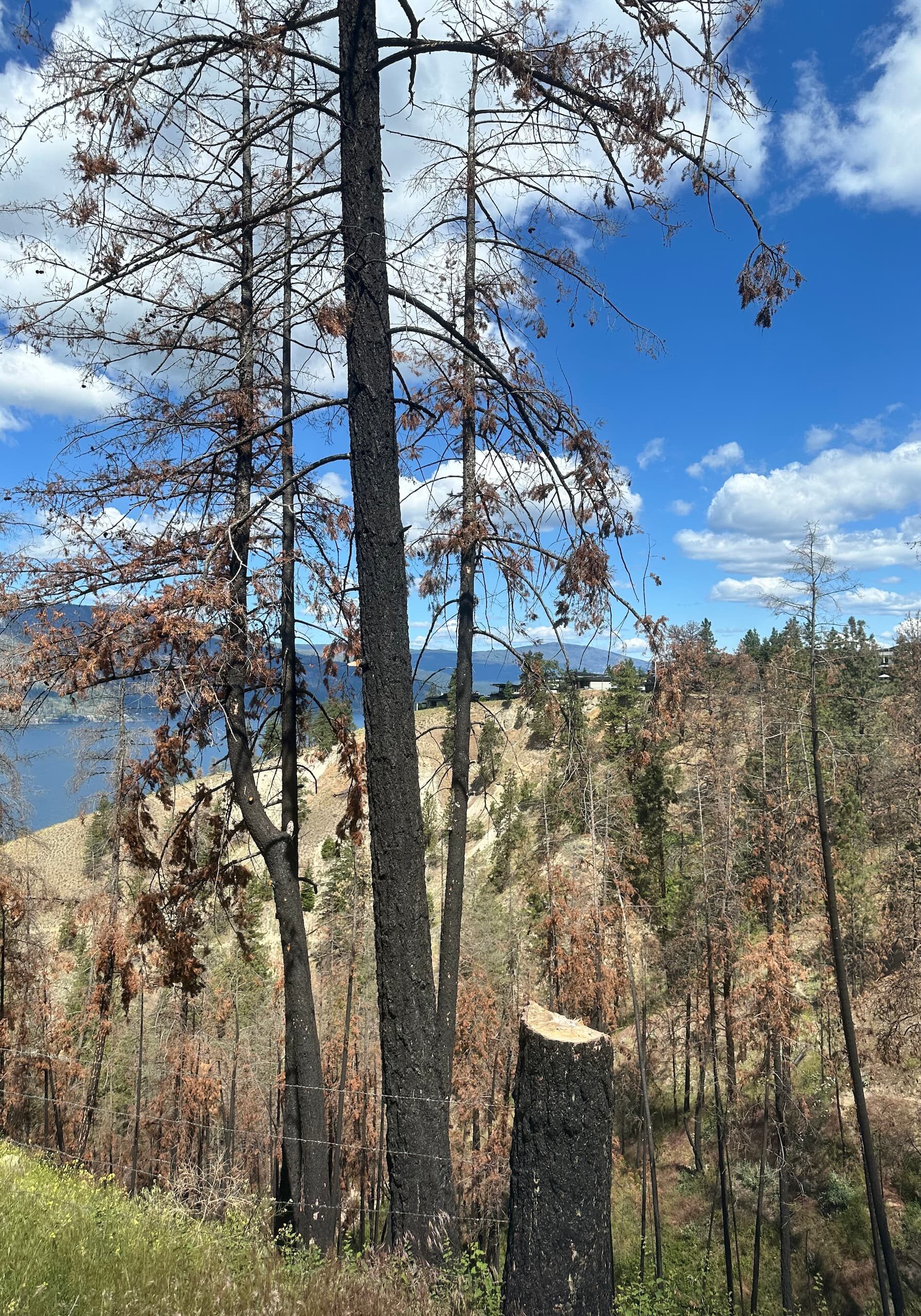
Wildfire adds a separate dimension. FireSmart Tree Services aim to reduce ladder fuels, break up continuous crowns, and move combustible materials away from structures. A drought stressed pine with pitch tubes and red crown flags two meters from a wood deck is a fire risk even if it is structurally sound. In interface zones, we weigh structural risk and fire risk together, sometimes removing otherwise acceptable trees to create defensible space.
What a professional assessment actually looks like
A thorough assessment starts with a walkaround and questions. How old is the tree relative to the neighborhood. Any recent construction, trenching, or grade changes. Has the crown density changed in the last two seasons. I carry a mallet, a probe, binoculars, and often a resistograph or sonic tomograph for stems that sound suspect. On valuable specimens, I sometimes use static pull tests with a load cell to evaluate stability without cutting.
We document defects with photos and measurements, then assign risk ratings to each prominent part, not just the whole tree. A main stem with moderate decay might be acceptable if the target area is low occupancy, while a single overextended limb above a walkway moves into the treat now box. The deliverable for a Certified Arborist Consultation should be a written plan: specific defects, recommended actions with timelines, and a reinspection schedule.
When removal is the right call
I do not remove trees lightly. They store carbon, cool homes, and anchor community history. Still, some trees cross a line where mitigation will not reduce risk enough. Advanced basal decay in a spruce next to a duplex, a split union over a bus stop, or a cottonwood with 40 percent root loss on the riverbank above a propane tank all earn the same recommendation. Removal now, followed by Stump Removal & Grinding and a replanting https://acetree.ca/tree-removal-services/ plan suited to the site.
Homeowners often ask about topping as a compromise. Topping creates large wounds that decay, throws epicormic sprouts that are weakly attached, and shifts the crown load in strange ways. It trades a big problem for many smaller, riskier ones. Proper Tree Pruning & Crown Shaping keeps live branches attached to the parent limb, encourages taper, and directs growth, which is how you lower risk without setting up bigger failures later.
Alternatives to removal for moderate risk
Not every problem requires a saw. I have saved heritage oaks and street lindens with a combination of pruning, Tree Cable and Bracing, and soil remediation. The goal is to shorten levers, redistribute load, and reduce the chance of stem or union failure.
On co dominants with included bark, through bolts backed by steel plates, paired with a non invasive dynamic cable above, can buy years of safety. The hardware does not remove risk entirely, and it needs periodic inspection. Pruning should reduce end weight, not strip the interior. Leave enough foliage to maintain energy production and taper, or you will force the tree into stress growth.
Soil work matters more than many people think. Air tilling to break compaction, adding coarse organic matter, and correcting grade around the root flare often produces healthier canopies in two to three seasons. In a few documented cases, careful root invigoration allowed us to cancel more expensive bracing plans because the tree regained vigor and wound wood production accelerated.
Working near houses, lines, and tight yards
Urban removals are choreography. In a 20 foot side yard with a garage, a fence, and service lines, we piece the tree down in small sections with ground pads, friction devices, and attentive rigging. A crane speeds the work when access allows, but it is not a cure all. I have declined crane work when soil bearing capacity was questionable after a week of rain. Sinking outriggers and strained brickwork are not worth the minutes saved.
Utilities raise the stakes. If branches are within ten feet of primary conductors, only line clearance qualified crews should work the canopy. That is not gatekeeping, it is law in many jurisdictions and good sense in all of them. The same goes for gas meters and service drops. We coordinate with utilities to de energize when needed and schedule the job to minimize outages for the neighborhood.
Permits, bylaws, and neighbors
Many cities regulate removals, especially on street trees and larger diameter specimens on private land. Expect conditions like replanting requirements, species lists, and timing restrictions for bird nesting. A reputable Tree Removal Services provider will navigate permits and provide proof of insurance that covers aerial work. Do not skip this step. I have seen homeowners stuck with fines and a half finished stump after hiring the cheapest bid with no paperwork.
Boundary trees and shared hedgerows need neighbor buy in. On disputed trees, a third party Certified Arborist Consultation helps de escalate. Clear, objective findings on risk and options keep the conversation off personal taste and onto safety and stewardship.
Cost, timeframes, and how professionals price risk work
Prices vary by region, access, tree size, and complexity. As a range, a basic removal of a small ornamental in a clear yard might run a few hundred dollars. A large conifer over a roof with limited access, intricate rigging, and haul out can climb into the thousands. Add complexity for weekend Emergency Tree Services or storm response. Stump Removal & Grinding is usually priced by diameter at grade and obstacles. Root flares and nearby hardscape add time because grinders must thread narrow clearances without chipping stone or spalling concrete.
Cabling and bracing is generally less than removal, though hardware costs and the need for certified installation add to the ticket. Pruning to reduce risk sits in the middle. FireSmart Tree Services work is often staged across a property, with initial hazard reduction near structures, then ladder fuel breaks and spacing projects in the outer zones as budget allows.
Two quick stories from the field
A homeowner called about a “leaning” Douglas fir that had shaded their deck for 30 years. The lean was old, but what changed was a sewer lateral replacement that cut three major roots. On site, the soil was heaving downslope and a new crack had opened along the root flare. We blocked access and scheduled removal for the next morning. Overnight, a light wind nudged the tree another inch. By noon the crane had the stem safe on the ground. The stump cut showed butter colored decay and severed structural roots 6 inches in diameter. The homeowner replanted with a smaller species, set back from the trench path, and fenced off a no trenching zone in their yard plan.
Another client had a historic beech with co dominant stems and a public sidewalk beneath. A previous service topped one leader fifteen years earlier. Decay tracked from the topping wound into the union. We installed a through bolt, added a dynamic cable set, and pruned both leaders to restore taper and reduce asymmetric load. We also aerated compacted soil and mulched the critical root zone. Six years later, the crown is fuller, wound wood rims have thickened, and the sidewalk remains open. We inspect the hardware every two years. It is not a forever fix, but it has extended the safe life of a loved tree.
What to expect during a professional removal
Well run crews show up with a plan. The lead climber or operator walks the drop zones with you, identifies fragile surfaces, and sets protection. Equipment staging matters. We keep chippers and trucks close enough to be efficient but far enough not to crush drive edges. In tight sites, a ground lead acts as a spotter so chips, ropes, and cut pieces do not tangle. Communication is constant. Hand signals, radios when needed, and a single person calling the main actions prevent double commands.
If we are using rigging, you will see friction devices anchored low to allow smooth control. Pieces descend under control rather than free falling. That saves structures and reduces shock load on remaining wood. Sections are cut to suit handling, not to wow with size. Bigger is not better if it compromises safety.
When the stem is on the ground, cuts are squared and stacked for chipping or milling, depending on your plan. If Stump Removal & Grinding is included, we sweep the surface first to protect the grinder teeth, locate utilities one last time, and grind to a depth that supports replanting or hardscape plans. Backfill is a blend of grindings and soil unless you request clean fill for turf.
Aftercare, replanting, and preventing the next hazard
Removing a tree solves today’s risk but leaves a hole in shade, habitat, and the yard’s composition. Thoughtful replanting starts with the right species for the site. Look at mature size, water needs, and root behavior. If soil compaction or trenching contributed to the last failure, address those conditions before planting again. Set the root flare at or slightly above grade, peel back burlap and cages, and correct circling roots at planting. Then water deeply but infrequently to promote deep rooting.
Ongoing Tree Pruning & Crown Shaping sets young trees on a stable course. Structural pruning in the first ten years pays compounding dividends. Choose a dominant leader, correct poor unions early, and keep live crown ratios healthy. Trees that grow good structure while young rarely need heavy intervention later.
Simple homeowner cues that deserve a call
- New lean appearing over weeks, or soil lifting opposite the lean
- Fresh cracks at unions, or a widening seam with included bark
- Mushrooms on the trunk or at the base, especially shelf fungi
- Dieback spreading through the crown, or heavy sprouting on large limbs
- Recent trenching or grade change within the dripline
When you see two or more of these together, schedule a Certified Arborist Consultation. Small issues caught early are almost always cheaper and safer to address than crises after a storm.
When the wind hits at 2 a.m.
If a tree or limb fails onto a structure, do not rush under it to investigate. Electricity, gas, and stored loads make night scenes deceptive. From a safe spot, make three calls in this order based on what you observe: emergency services if there are injuries or live wires, your utility if lines are involved, and a qualified Emergency Tree Services provider. Photo documentation from a safe angle helps your insurer and the crew. Once on site, we stabilize rather than clean up in a rush. The first priority is to remove compression on damaged structures without causing secondary collapses. Only after the site is stable do we move into full debris removal.
Choosing the right partner
Look for companies that put assessment before action. A Dangerous Tree Assessment and Removal provider should show you defects, explain options, and be comfortable recommending Tree Cable and Bracing or pruning when removal is not warranted. Certification matters. ISA Certified Arborists and TRAQ credentialed assessors bring standardized training to the judgment calls. Ask about insurance levels appropriate for aerial work, not just general liability. Finally, make sure they stand behind ancillary services like Stump Removal & Grinding and FireSmart Tree Services so your property care is integrated, not piecemeal.
A practical cadence for staying ahead of risk
I advise clients to pair annual visual checks with deeper inspections every three to five years, more often for large trees near high occupancy targets. After major weather events, do a quick walkthrough. If you manage a strata or campus, keep a simple map of notable trees with notes from each visit. Patterns emerge over time. A limb that sags an extra inch each spring is telling you something. So is a crown that thins uniformly after a drought.
Trees are living structures in moving air and changing soil. They reward attention. With timely assessment, sound Tree Pruning & Crown Shaping, strategic Tree Cable and Bracing when appropriate, and FireSmart thinking at the property scale, most risks can be reduced to tolerable levels. When a tree finally crosses into the unsafe column, prompt, professional Tree Removal Services paired with careful Stump Removal & Grinding closes the loop and sets the stage for a better matched replacement.
Risk management is not about cutting every tree that looks imperfect. It is about reading defects in context, understanding site forces, and matching action to consequence. That blend of analysis and field craft keeps people safe, properties intact, and the right trees growing where they belong.
Ace Tree Services Ltd.
Name: Ace Tree Services Ltd.Address: 4656 Wallace Hill Road, Kelowna, BC
Postal code: V1W 4C2
Phone: 250-212-9593
Website: https://acetree.ca/
Hours:
Monday: 7:00 AM - 5:00 PM
Tuesday: 7:00 AM - 5:00 PM
Wednesday: 7:00 AM - 5:00 PM
Thursday: 7:00 AM - 5:00 PM
Friday: 7:00 AM - 5:00 PM
Saturday: 7:00 AM - 5:00 PM
Sunday: Closed
Open-location code (plus code): RHF8+8G Kelowna, British Columbia, Canada
Map/listing URL: https://www.google.com/maps/place/Ace+Tree+Services+Ltd./@49.8232606,-119.4337283,659m/data=!3m2!1e3!4b1!4m6!3m5!1s0x537d8b1d074815c5:0x450b88afa7a41435!8m2!3d49.8232606!4d-119.4337283!16s%2Fg%2F11ydkpnh22
Embed iframe:
"@context": "https://schema.org", "@type": "HomeAndConstructionBusiness", "name": "Ace Tree Services Ltd.", "url": "https://acetree.ca/", "telephone": "250-212-9593", "address": "@type": "PostalAddress", "streetAddress": "4656 Wallace Hill Road", "addressLocality": "Kelowna", "addressRegion": "BC", "addressCountry": "CA" , "openingHoursSpecification": [ "@type": "OpeningHoursSpecification", "dayOfWeek": "https://schema.org/Monday", "opens": "07:00", "closes": "17:00" , "@type": "OpeningHoursSpecification", "dayOfWeek": "https://schema.org/Tuesday", "opens": "07:00", "closes": "17:00" , "@type": "OpeningHoursSpecification", "dayOfWeek": "https://schema.org/Wednesday", "opens": "07:00", "closes": "17:00" , "@type": "OpeningHoursSpecification", "dayOfWeek": "https://schema.org/Thursday", "opens": "07:00", "closes": "17:00" , "@type": "OpeningHoursSpecification", "dayOfWeek": "https://schema.org/Friday", "opens": "07:00", "closes": "17:00" ], "geo": "@type": "GeoCoordinates", "latitude": 49.8232606, "longitude": -119.4337283 , "hasMap": "https://www.google.com/maps/place/Ace+Tree+Services+Ltd./@49.8232606,-119.4337283,659m/data=!3m2!1e3!4b1!4m6!3m5!1s0x537d8b1d074815c5:0x450b88afa7a41435!8m2!3d49.8232606!4d-119.4337283!16s%2Fg%2F11ydkpnh22"
Ace Tree Services Ltd. provides professional tree removal, pruning, stump grinding, emergency response, and arborist consultations for properties in Kelowna and across the Okanagan Valley.
The company works with homes, commercial properties, and municipal settings where tree work needs to be planned carefully around buildings, fences, driveways, landscaping, and other site constraints.
Based in Kelowna, the team is positioned to help nearby neighbourhoods and surrounding Okanagan communities with routine tree care and time-sensitive storm cleanup.
Customers looking for careful tree work often want a crew with certified arborist training, insurance, and a methodical approach to higher-risk removals.
Services also include dangerous tree assessment, cabling and bracing, and wildfire risk reduction tree work for properties that need longer-term planning.
To request a quote or discuss tree care options, call 250-212-9593 or visit https://acetree.ca/.
A public map listing is available to help customers confirm the business location and get directions before a site visit or estimate.
For Kelowna property owners who need pruning, removals, or emergency tree help, a local tree service can make it easier to schedule site-specific recommendations and cleanup.
Popular Questions About Ace Tree Services Ltd.
What services does Ace Tree Services Ltd. provide?Ace Tree Services Ltd. lists tree removal, stump removal and grinding, tree pruning and crown shaping, emergency tree service, arborist consultation, dangerous tree assessment and removal, cabling and bracing, and wildfire risk reduction tree work.
Who does Ace Tree Services Ltd. serve?
The company describes its work as serving homes, businesses, and municipalities in Kelowna and across the Okanagan Valley.
Is emergency tree help available?
Yes. Emergency service is listed for downed or uprooted trees, dangerous tree assessment, stabilization work, and branch cleanup. If a tree is near power lines, the safest first step is to stay clear and contact the utility provider before any tree work begins.
Do I always need a permit to remove a tree?
Not always. Permit requirements can depend on where the tree is located and whether it is near a creek, lake, steep slope, or another protected area. It is best to check local rules for the specific property before removal work starts.
How deep does stump grinding usually go?
Standard stump grinding is typically described as going about 6 to 12 inches below ground level, which is often enough for grass or surface landscaping. Deeper grinding may be possible when site plans call for it.
How much of a tree can be safely removed at one time?
That depends on the species, age, health, and structure of the tree. In practice, good pruning is usually about removing the right limbs for health, clearance, and structure rather than chasing a fixed percentage.
What are common signs that a tree may be dangerous?
Large dead limbs, visible cracks, a new lean, root damage, canopy dieback, or storm-related damage can all be warning signs. Trees near structures deserve extra attention when any of those issues appear.
What is cabling and bracing in tree care?
Cabling and bracing are support systems used to reduce the risk of failure in trees with structural weaknesses that may still be worth preserving. They are generally used to add support, not to replace good assessment and ongoing maintenance.
How do I contact Ace Tree Services Ltd.?
Call 250-212-9593.Website: https://acetree.ca/.
Landmarks Near Kelowna, BC
Downtown KelownaThe downtown core is a practical reference point for lakefront neighbourhoods, mixed-use streets, and central residential properties. If your property is near downtown, tree pruning, removals, and cleanup can be planned around tighter access and nearby structures.
Knox Mountain Park
This well-known park north of downtown is a recognizable landmark for nearby homes and hillside properties. If you are close to this area, ask about tree assessment, trimming, or removal work suited to sloped sites.
Mission Creek Greenway
The greenway runs through several parts of Kelowna and is a useful landmark for nearby residential areas. If your property borders or sits near this corridor, site-specific tree planning is especially important.
Pandosy Village
Pandosy is one of Kelowna’s most recognizable neighbourhoods and a common reference point for south-central properties. If you are nearby, request help for pruning, removals, or storm cleanup around homes and small commercial sites.
Rutland
Rutland is a major east Kelowna neighbourhood with a mix of residential and local commercial properties. If you are located in or near Rutland, tree work can be scheduled for both routine maintenance and urgent situations.
Landmark District
This central business-focused area is a practical landmark for offices, service properties, and nearby residential streets. If your site is near the district, ask about careful tree work around parking, access lanes, and built-up lots.
Kelowna’s North End
The North End sits on the edge of downtown and is a useful reference for nearby homes, industrial sites, and commercial properties. If you are in this part of the city, request tree care based on the layout and constraints of the lot.
Airport District
The Airport District is a recognizable north Kelowna reference point for surrounding properties and access routes. If you are in this area, ask about tree services for residential acreage, commercial sites, or roadside cleanup needs.
Glenmore & Dilworth
These established Kelowna neighbourhoods are useful landmarks for central and north-central service calls. If your property is nearby, pruning and removal work can be tailored to mature trees and established landscapes.
Highway 97 Corridor
Highway 97 is one of the city’s main travel routes and a common way to describe location within Kelowna. If your home or property is just off the corridor, a clear landmark reference can help speed up quote scheduling and site planning.